
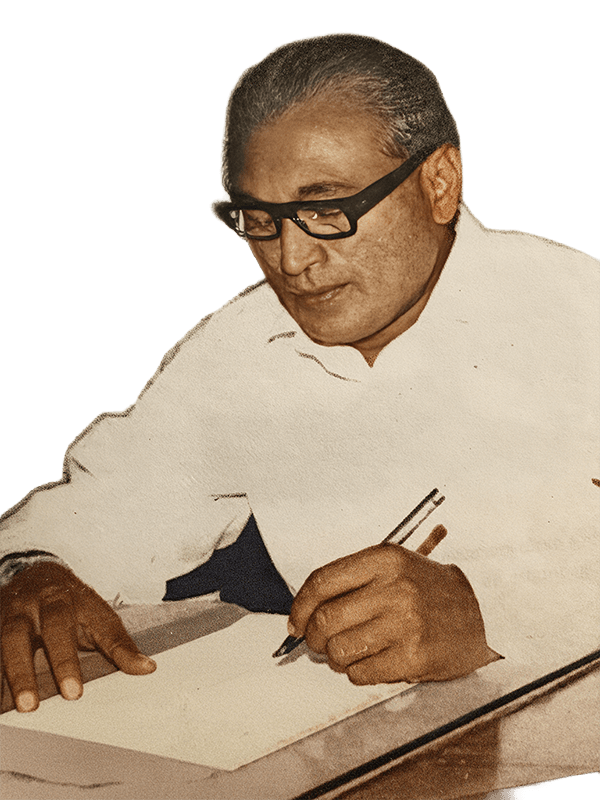
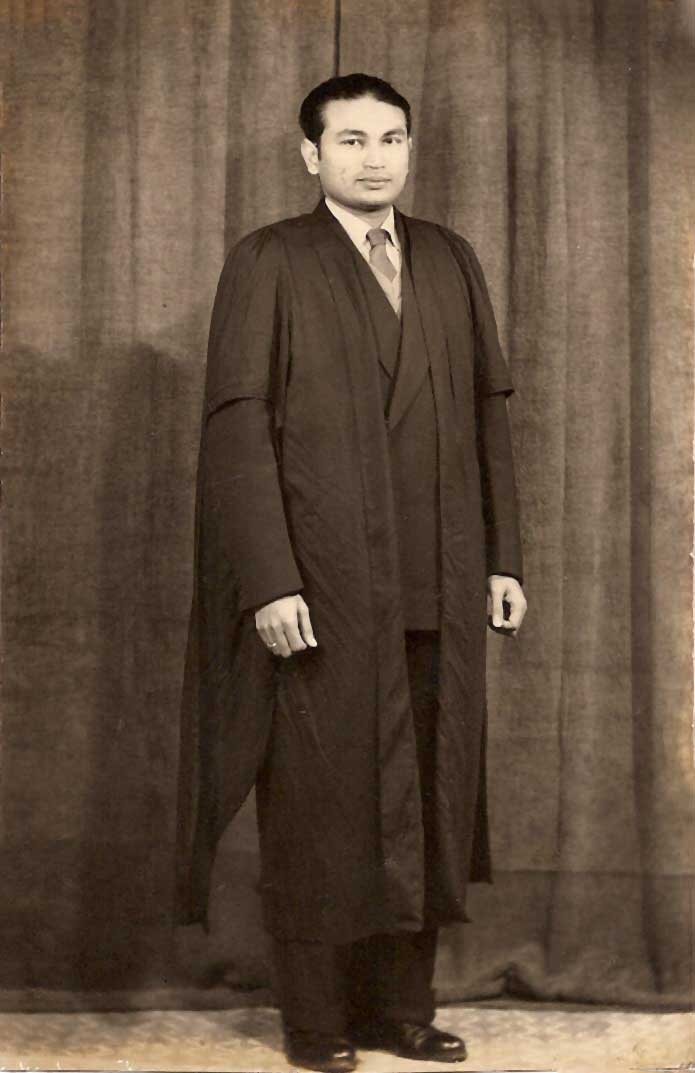
Academic Career and Contributions
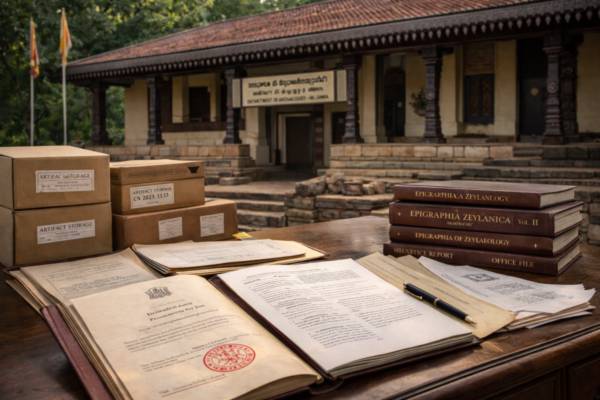
Dr. Saddhamangala Karunaratne served as an archaeologist in Sri Lanka for over three decades, beginning his career in 1950 as Assistant Archaeological Commissioner in the Department of Archaeology. He later held the position of Archaeological Commissioner until his retirement in 1983.
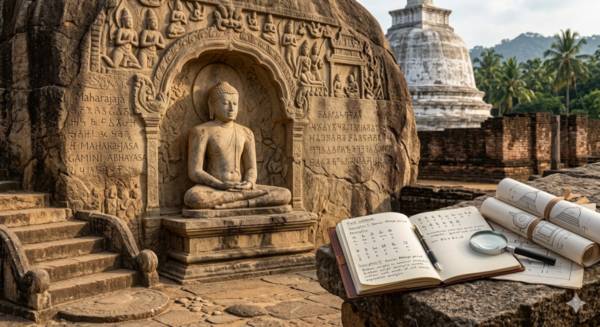
Trained in Pali and Sanskrit at the University of Ceylon (B.A. Honours, 1946; M.A., 1949), he obtained his PhD in Epigraphy from the University of Cambridge in 1960. His doctoral research, Brāhmī Inscriptions of Ceylon, remains a significant contribution to the study of early Sri Lankan inscriptions.
Working under Professor Senerat Paranavitana, Dr. Karunaratne specialized in the documentation, publication, and interpretation of Brāhmī inscriptions. His scholarship contributed to a more systematic understanding of Sri Lanka’s early historical records and its connections to South Asian epigraphical traditions.
In addition to his research, he played a key institutional role within the Department of Archaeology, contributing to both field documentation and scholarly publications, including editorial work in Epigraphia Zeylanica.
He was awarded national honors, including the Desha Bandhu, in recognition of his service to Sri Lankan archaeology.
Major Scholarly Contributions
Dr. Karunaratne’s scholarship can be understood through four principal areas of contribution.
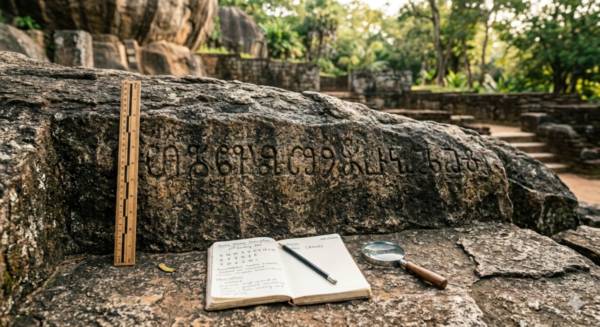
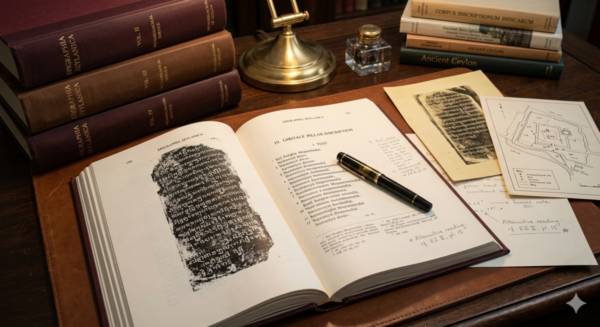
Major Contributions to Sri Lankan Epigraphy
Dr. Karunaratne’s research on Brāhmī inscriptions contributed significantly to the systematic documentation, linguistic analysis, and chronological study of early Sri Lankan epigraphy. His scholarship strengthened historical interpretation of Buddhist art and early Sri Lankan civilization.
• Systematic publication and analysis of Brāhmī inscriptions
• Editorial contributions to Epigraphia Zeylanica
• Administrative leadership within the Department of Archaeology
Enduring Impact on Sri Lankan Archaeological Studies
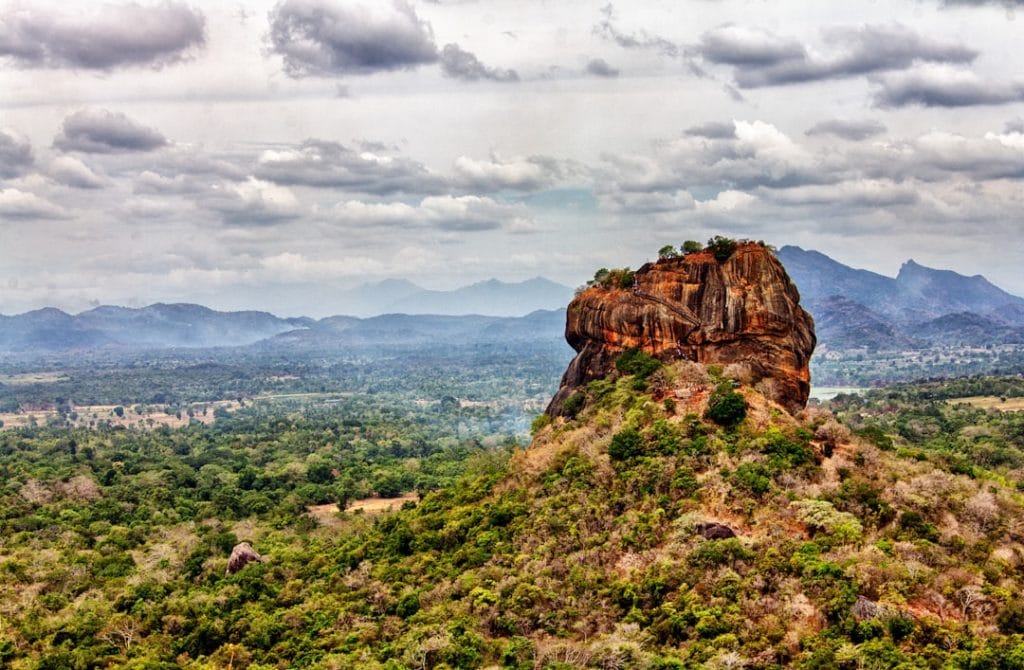
Dr. Karunaratne’s research continues to inform contemporary studies in Sri Lankan epigraphy and archaeology. His documentation of Brāhmī inscriptions and scholarly publications remain significant reference source in the interpretation of early historical materials.